Vocal Training · Rishikesh

Your Voice Is Already the Instrument.

A one-to-one Hindustani vocal course on the banks of the Ganges — where the instrument you have carried your whole life is finally trained. No prior singing experience needed, and no fear of your own voice required.

About the Practice

Nothing to Buy, Nothing to Carry.

Vocal training is the oldest discipline in Indian classical music, and the only one where the instrument was given to you at birth.

That makes it both the most natural and the most exposing thing to study. There is no wood or brass between you and the listener — the sound comes from your body, shaped by your breath, your throat and your attention. Most students are nervous in the first session, and almost all of them stop being nervous by the third.

We do not begin by asking whether you can sing. We begin with breath, posture and one long sustained note on a single pitch. From there, sur — accuracy of pitch — is built slowly and physically, not by talent but by repetition and honest correction.

Because Indian classical singing is taught orally, you will never be handed sheet music. Your teacher sings a phrase, you sing it back, and the gap between the two closes over the weeks. It is a slower method than reading notes, but what you learn this way stays with you permanently.

“A trained voice is not a louder voice. It is a voice that goes exactly where you send it.”

Teaching principle at Rishikesh Music Class

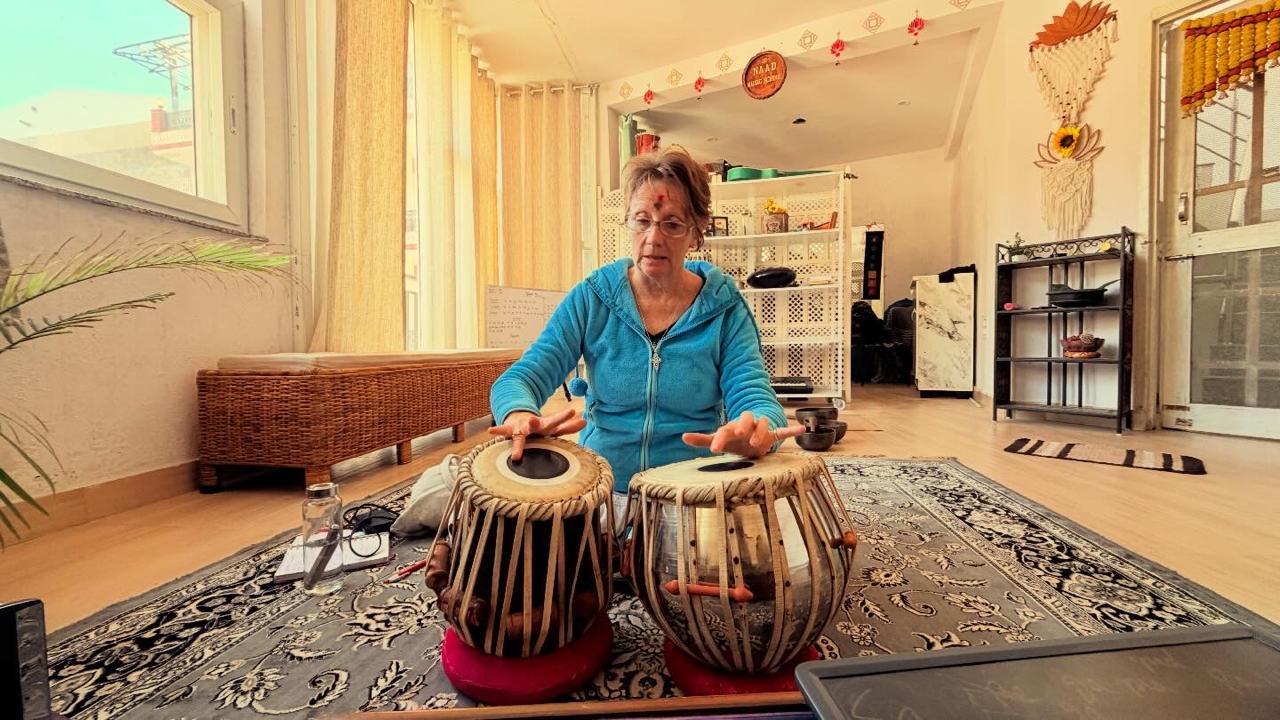
Vocal Training used in classes at Rishikesh Music Class
Vocal training — breath, sur and stillness
1:1Always
How a Session Runs

From Breath to Raga Expression.

No two students receive the same lesson, because your voice is unlike anyone else's. What stays constant is the shape of the session — and that shape is what turns scattered practice into steady progress.

1

Breath and body

Posture, diaphragm awareness and long sustained tone on one note. Everything in singing rests on this, and it is the part students most often want to skip.

2

Sur and swar

Pitch accuracy against the tanpura or harmonium drone, note by note, until your ear stops guessing and starts knowing.

3

Alankar and palta

Structured melodic patterns across the octaves that train agility, breath control and precision at increasing speed.

4

Raga and bandish

The character of a raga learned through phrases, then a fixed composition to hold it together — something complete you can actually sing.

5

Riyaz plan

Every class ends with a written practice instruction — what to repeat, what to listen for, and how long to spend on each part.

1–2Hours per class
6Daily time slots
1–2Hours riyaz
One-to-one vocal training lesson in progress in Rishikesh
One student, one guru, one note at a time
30Max sessions
Course Options

Choose the Depth, Not Just the Dates.

Students arrive in Rishikesh with very different amounts of time. A traveller passing through for ten days needs something different from someone who has come specifically to study for a month. So the course comes in four honest sizes, and we will tell you plainly which one fits.

07

Seven sessions — Introduction

A real first experience rather than a taster. Breath control, steady tone on the lower notes, basic sargam, and a clear method for practising alone afterwards.

10

Ten sessions — Foundation

The most popular choice. Sur across the middle octave, alankar patterns, your first raga phrases, and a short bandish you can sing from memory.

15

Fifteen sessions — Skill development

For students who want the voice to stop wobbling. Fuller tone, cleaner transitions, wider range, and noticeably more confidence in your sound.

30

Thirty sessions — Intensive training

Genuine transformation. Multiple ragas, alap and improvisation, ornamentation, taal awareness, and the beginnings of your own gayaki.

Not sure which to take? Start shorter. Many students begin with seven or ten sessions and extend while they are here — it is far easier to add sessions than to rush a course you have already paid for.

Students practising Indian classical music in Rishikesh
Practice beside the Ganges, Laxman Jhula
4Course lengths
Levels & Timings

From First Note to Improvisation.

You do not need any musical background to begin, and you do not need to read notation at any stage. Indian classical music is transmitted orally — by listening, singing and repeating — and sargam becomes familiar naturally as you go.

B

Beginner

Breath, posture, voice placement, pitch matching and your first sargam patterns. If you have been told you cannot sing, this is exactly where that gets tested honestly — and usually disproved.

I

Intermediate

Stronger tone, wider range, cleaner movement between notes, alankars at speed, and deeper melodic control within a raga.

A

Advanced

Raga expression, alap, improvisation, ornamentation such as meend and murki, taal awareness, and full bandish performance.

Class timings. Six slots run daily and you keep the one that suits your routine: 9:30–10:30 AM, 11:00 AM–12:00 PM, 12:30–1:30 PM, 2:00–3:00 PM, 4:00–5:00 PM, and 5:30–6:30 PM. Morning slots are traditionally best for voice, when the throat is rested and clear.

Online is available. Live one-to-one lessons run over Zoom, Google Meet or WhatsApp video, scheduled around your local time zone. Use headphones so you can hear the drone clearly against your own voice.

Guru correcting a student's vocal training technique and posture
Patient correction — the heart of the method
6Time slots
Beginning with Shree Ganesha

Every Course Opens With Sound

॥॥ वक्रतुंड महाकाय
सूर्यकोटि समप्रभ।
निर्विघ्नं कुरु मे देव
सर्वकार्येषु सर्वदा ॥॥
ॐ गं गणपतये नमः

Before the first note is sung, students and guru chant together. It is a short moment, but it settles the room and marks the class as something separate from the day around it — clarity, confidence and the removal of obstacles before learning begins.

Course Guided By

Amresh Kumar

Vocal and Naad music training at Rishikesh Music Class, Laxman Jhula, Rishikesh. Trained in the traditional Indian classical lineage, with years of teaching students from across the world.

  • One-to-one guidance throughout the course.
  • Traditional Naad and guru–shishya method.
  • Patient correction, structured practice plans.
  • Long experience teaching international students.
  • Classes conducted in English and Hindi.
Before You Arrive

Please Note

Rishikesh Music Class provides music courses only. Accommodation and hotel facilities are not provided by the school.

Please book your own hotel, room, guest house or ashram stay before arriving. Many comfortable and affordable options sit within walking distance of the school at Laxman Jhula, and we are happy to suggest areas.

Nothing to bring. Vocal training needs no instrument at all. A tanpura or harmonium drone is provided in class, and for home practice a free tanpura app on your phone is perfectly sufficient.

Book Your Sessions

Ready to Begin Vocal Training?

Send the short form across and it opens directly in WhatsApp with your details already written out. We reply personally — usually within a few hours — with availability, the current fee for your chosen course, and a suggested start date.

  • No payment or card details required to enquire.
  • We confirm your time slot before you travel.
  • Trial session available if you would rather try first.
  • Available for both in-person and online students.

Vocal Course Inquiry

Takes under a minute to fill.

Opens in WhatsApp with your details filled in.
Nothing is stored on this website.