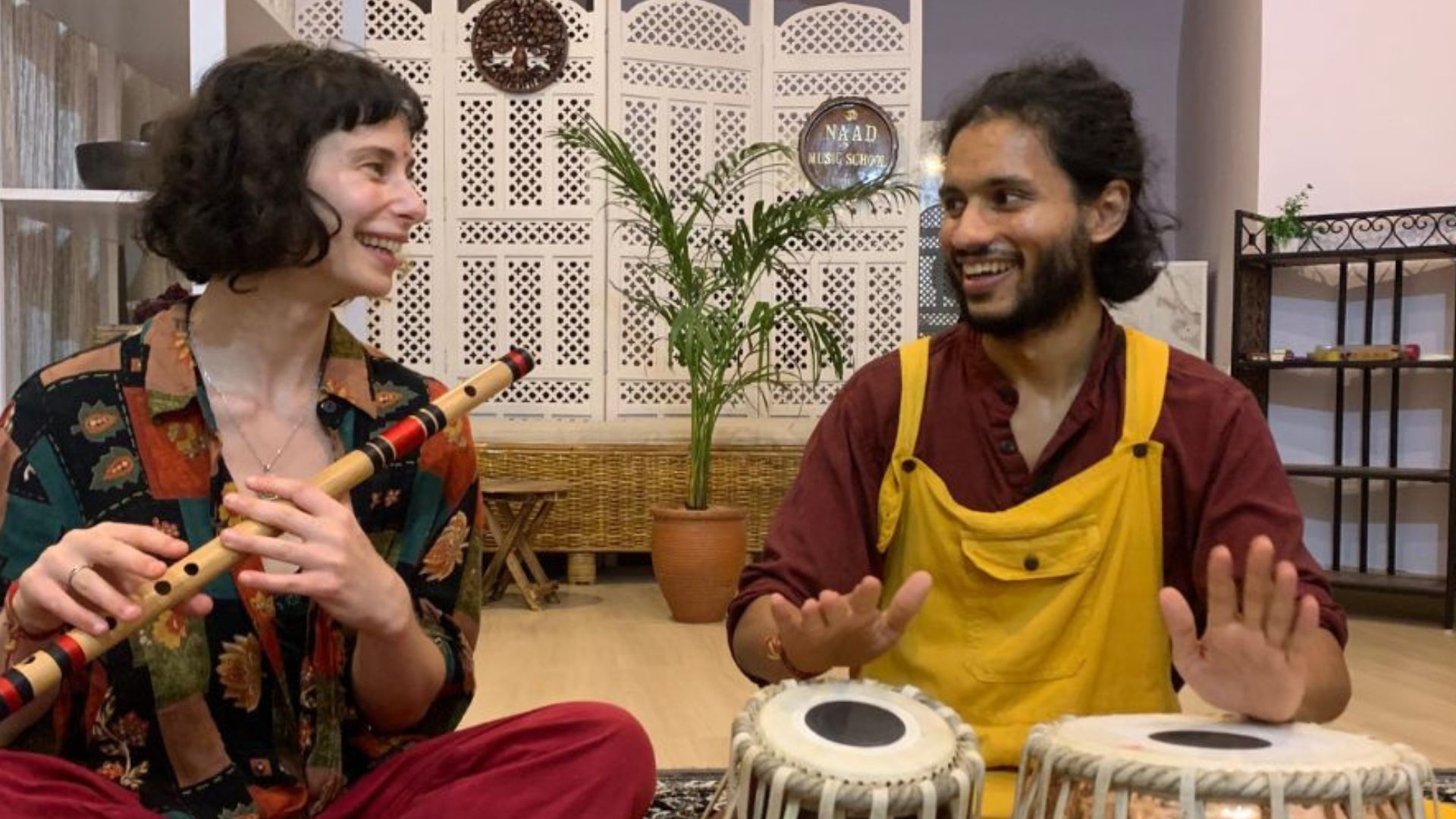
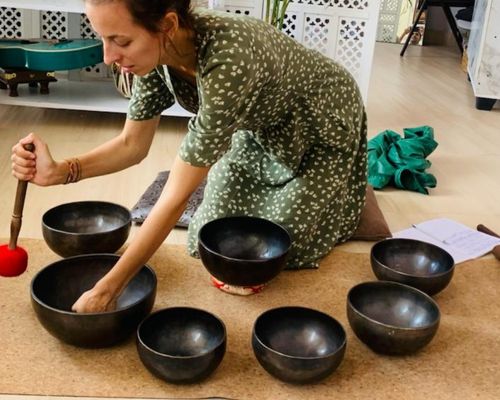
A one-to-one raga studies course on the banks of the Ganges — for students who can already play or sing, and now want to understand what they are playing. Structure, mood, time and the freedom that comes from knowing the rules.
The most common misunderstanding about Indian classical music is that a raga is a scale. It is not, and the difference matters enormously.
A scale is a list of notes. A raga is a set of rules about how those notes behave — which one you rest on, which one you approach from above, which one you touch and leave quickly, which phrase announces the raga unmistakably. Two ragas can contain exactly the same notes and still sound nothing alike, because the movement between them is entirely different.
That is why ragas are described as having character rather than content. Each has a mood, a traditional time of day, and phrases that belong to it and to nothing else. Learning a raga is closer to learning a person's manner of speaking than learning a formula.
This course is for students who already have some command of an instrument or their voice. Rather than adding more technique, it gives you the framework that makes your existing technique meaningful — and eventually, the confidence to improvise within it.
“You cannot improvise freely until you know exactly what the raga will not allow.”
Teaching principle at Rishikesh Music Class
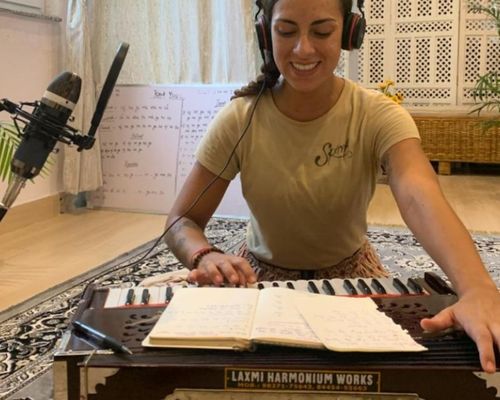
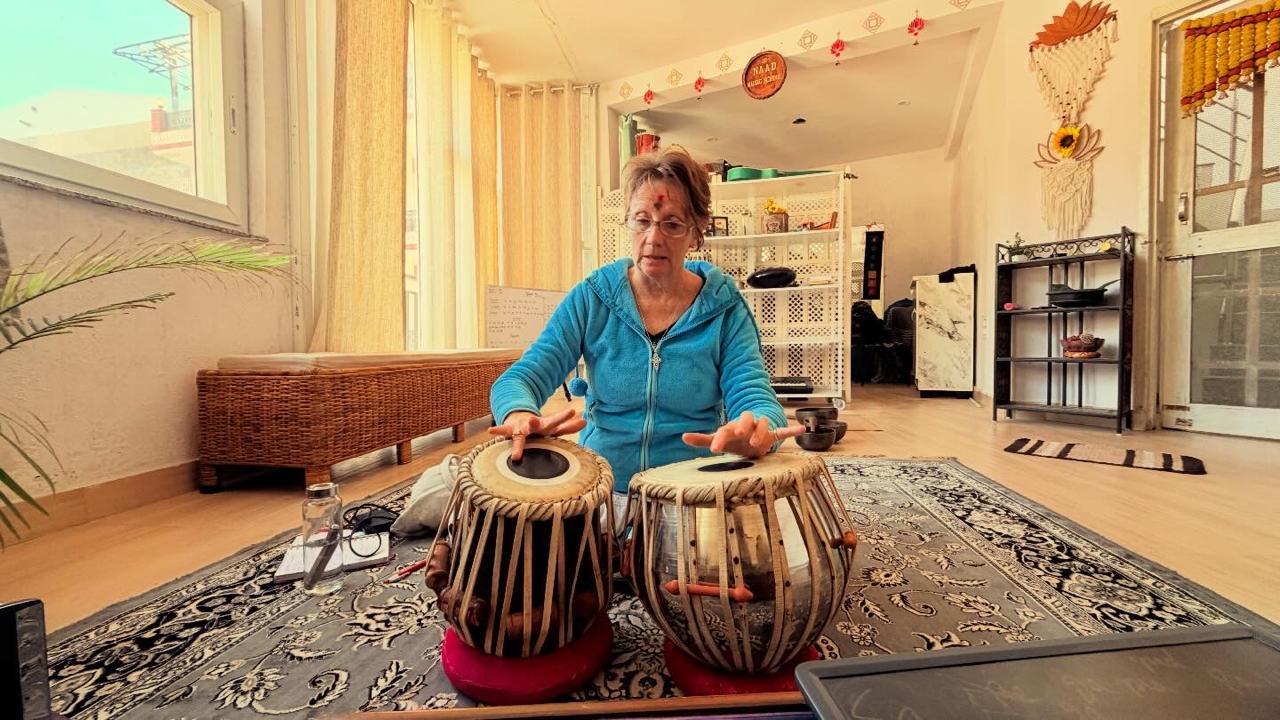
No two students receive the same lesson, because it depends on your instrument and what you already know. What stays constant is the shape of the session — and that shape is what turns theory into something you can actually use.
Aroha and avaroha, vadi and samvadi, pakad and chalan. The technical vocabulary explained plainly, then immediately applied to a raga you can hear.
How ragas are grouped, what the parent scales are, and why two ragas sharing notes still behave as separate entities. This is the map that makes the rest navigable.
Guided listening to recordings and to your teacher, until you can name what is happening rather than just enjoying it. Most students find this the fastest-improving skill.
Unfolding a raga slowly without rhythm, then building phrases of your own within its rules — the point where study becomes music.
Every class ends with a written instruction — which raga to sit with, what to listen for, and which phrases to internalise before the next session.

Raga studies rewards time more than most subjects, because understanding accumulates rather than arriving. For that reason the course starts at ten sessions rather than seven — anything shorter tends to be theory you forget.
Raga grammar, thaat classification, and two or three ragas studied properly with their phrases, moods and time associations. A real framework to build on.
More ragas across contrasting moods, deeper listening skills, alap construction, and the beginnings of your own improvisation within a raga's rules.
Genuine depth. A substantial raga repertoire, seasonal and time-cycle ragas, complex phrasing, extended alap, laykari, and confident improvisation.
Please note. Raga studies assumes you already play an instrument or sing at least at an intermediate level. If you are a complete beginner, start with an instrument or vocal course first — raga will make far more sense once your hands or voice can follow it.

You do not need to read Western notation at any stage. Ragas are transmitted orally — by listening, singing and repeating — and sargam becomes second nature as you go. What you do need is some existing command of your instrument or voice.
Raga grammar, thaat, a first set of ragas with their phrases and moods, and guided listening to build recognition. Suitable once you can play or sing comfortably.
A wider repertoire, seasonal and time-cycle ragas, complex phrasing, extended alap, laykari, and improvisation that stays true to the raga.
For long-term students: raga presentation, accompaniment with tabla, concert structure, and developing a personal interpretive voice.
Class timings. Six slots run daily and you keep the one that suits your routine: 9:30–10:30 AM, 11:00 AM–12:00 PM, 12:30–1:30 PM, 2:00–3:00 PM, 4:00–5:00 PM, and 5:30–6:30 PM. Where possible we schedule a raga at the time of day it traditionally belongs to.
Online is available. Live one-to-one lessons run over Zoom, Google Meet or WhatsApp video, scheduled around your local time zone. Raga study works well online, since much of it is listening, discussion and phrase work.

Before the first phrase is played, students and guru chant together. It is a short moment, but it settles the room and marks the class as something separate from the day around it — clarity, confidence and the removal of obstacles before learning begins.
Raga studies and Naad music training at Rishikesh Music Class, Laxman Jhula, Rishikesh. Trained in the traditional Indian classical lineage, with years of teaching students from across the world.
Rishikesh Music Class provides music courses only. Accommodation and hotel facilities are not provided by the school.
Please book your own hotel, room, guest house or ashram stay before arriving. Many comfortable and affordable options sit within walking distance of the school at Laxman Jhula, and we are happy to suggest areas.
Bring your instrument. Raga studies is applied rather than theoretical, so you will be playing or singing throughout. Vocal students need nothing; instrumentalists should bring the instrument they already play.
Send the short form across and it opens directly in WhatsApp with your details already written out. We reply personally — usually within a few hours — with availability, the current fee for your chosen course, and a suggested start date.