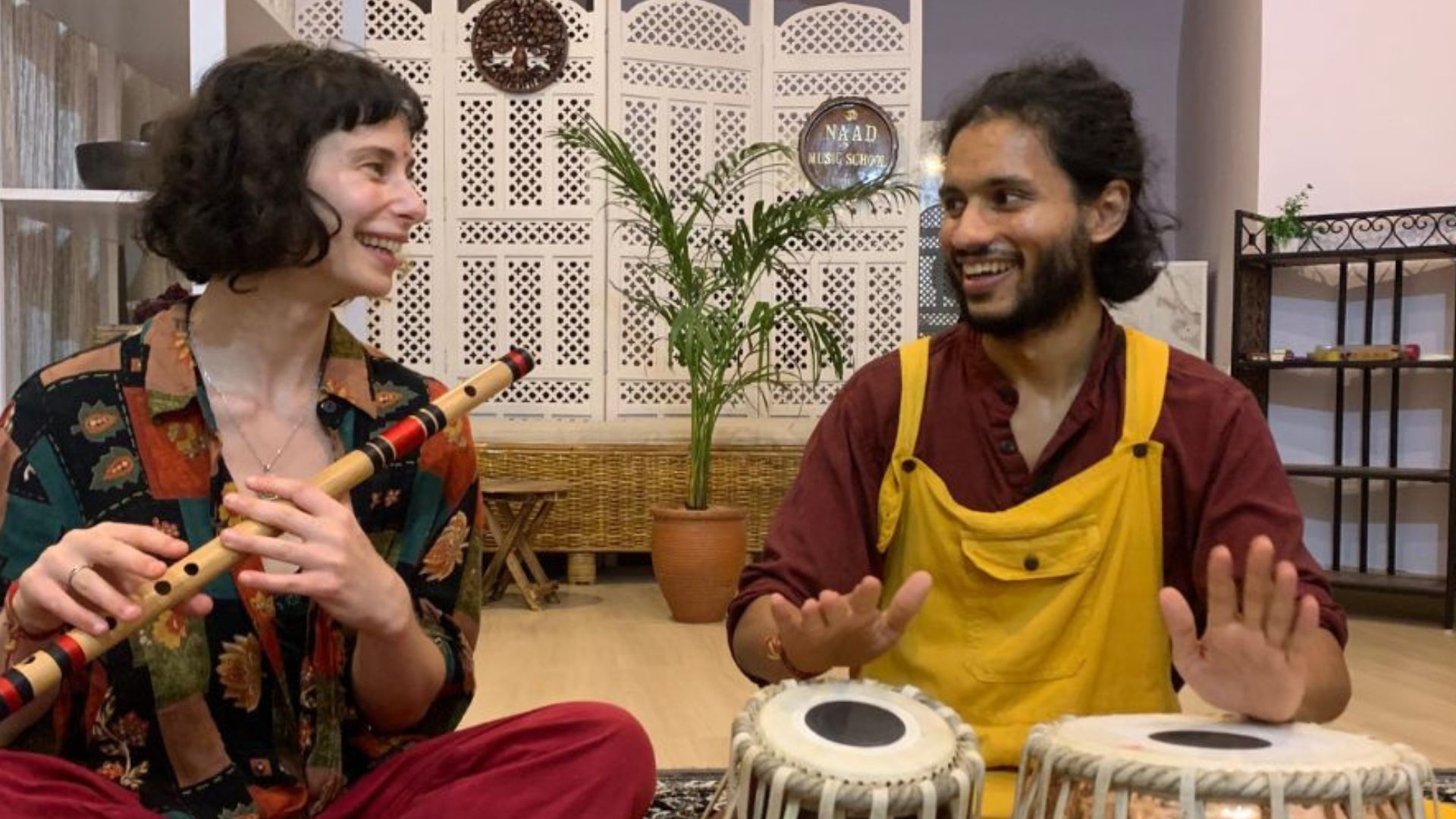
A one-to-one Bansuri flute course on the banks of the Ganges — where a single bamboo tube, six finger holes and your own breath become a complete musical language. Taught in the traditional guru–shishya way, at your pace, from your very first note.
The bansuri is the simplest instrument in Indian classical music, and for that exact reason it is the most honest one.
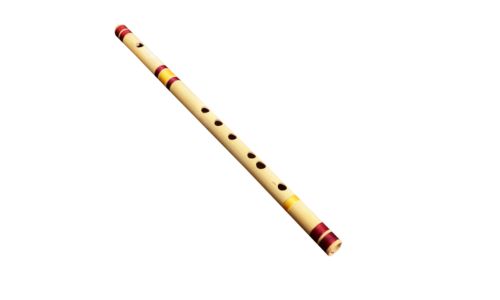
There are no keys, no reeds, no frets and no mechanism between you and the sound. A length of bamboo, six or seven open holes, and the column of air you send through it — that is the entire instrument. Every quality of your tone comes directly from how you breathe, how you sit, and how still your mind is in that moment.
This is why the flute has always been tied to meditation in India. You cannot force a beautiful note out of a bansuri. You can only relax into it. Students often notice within the first week that their breathing has changed outside of class too — slower, lower, quieter.
Our course treats the instrument that way from day one. You will not be handed a book of exercises to grind through. You will be taught to listen, to breathe, and to let a note settle before you reach for the next one.
“Learn to hold one note beautifully. Every raga you will ever play is already inside that note.”
Teaching principle at Rishikesh Music Class
No two students receive the same lesson, because the course has no fixed script. What stays constant is the shape of the session — and that shape is what makes progress feel steady rather than random.
Posture, shoulder release, and long sustained notes. This is where tone is actually built — most students spend more time here than they expect, and it is the reason their sound carries.
Note accuracy across the octaves, then structured melodic patterns that train the fingers and the ear together until the movement stops being conscious.
Learning the character of a raga — its ascent, descent, resting notes and mood — through short phrases you can actually play, long before any theory is memorised.
A fixed piece to hold everything together, giving you something complete to play for yourself, and something to return to when practice feels shapeless.
Every class ends with a written practice instruction for the days ahead — what to repeat, what to listen for, and what to leave alone for now.

Students arrive in Rishikesh with very different amounts of time. A traveller passing through for ten days needs something different from someone who has come specifically to study for a month. So the course is offered in four honest sizes, and we will tell you plainly which one suits your situation.
A real first experience rather than a taster. You will produce a clean tone across the lower octave, learn your first melodic patterns, and leave knowing how to practise correctly on your own.
The most popular choice. Full note command, breath stamina, alankars, and your first raga phrases with a short composition you can play from memory.
For students who want technique to stop being the obstacle. Clarity, speed, cleaner fingering, the middle and upper octaves, and considerably more confidence in your sound.
Genuine transformation. Multiple ragas, improvisation, meend and ornamentation, accompaniment practice, and the beginnings of your own musical voice on the instrument.
Not sure which to take? Start shorter. Many students begin with seven or ten sessions and extend while they are here — it is far easier to add sessions than to rush through a course you have already paid for.

You do not need any musical background to begin, and you do not need to read notation at any stage. Indian classical music is transmitted orally — by listening, singing and repeating — and sargam becomes familiar to you naturally as you go.
Breath awareness, embouchure, finger placement, the first clear notes, and simple melody patterns. If you have never held a flute, this is your starting point and no prior knowledge is assumed.
Stronger and steadier tone, cleaner fingering, structured riyaz, control across octaves, and deeper melodic movement within a raga.
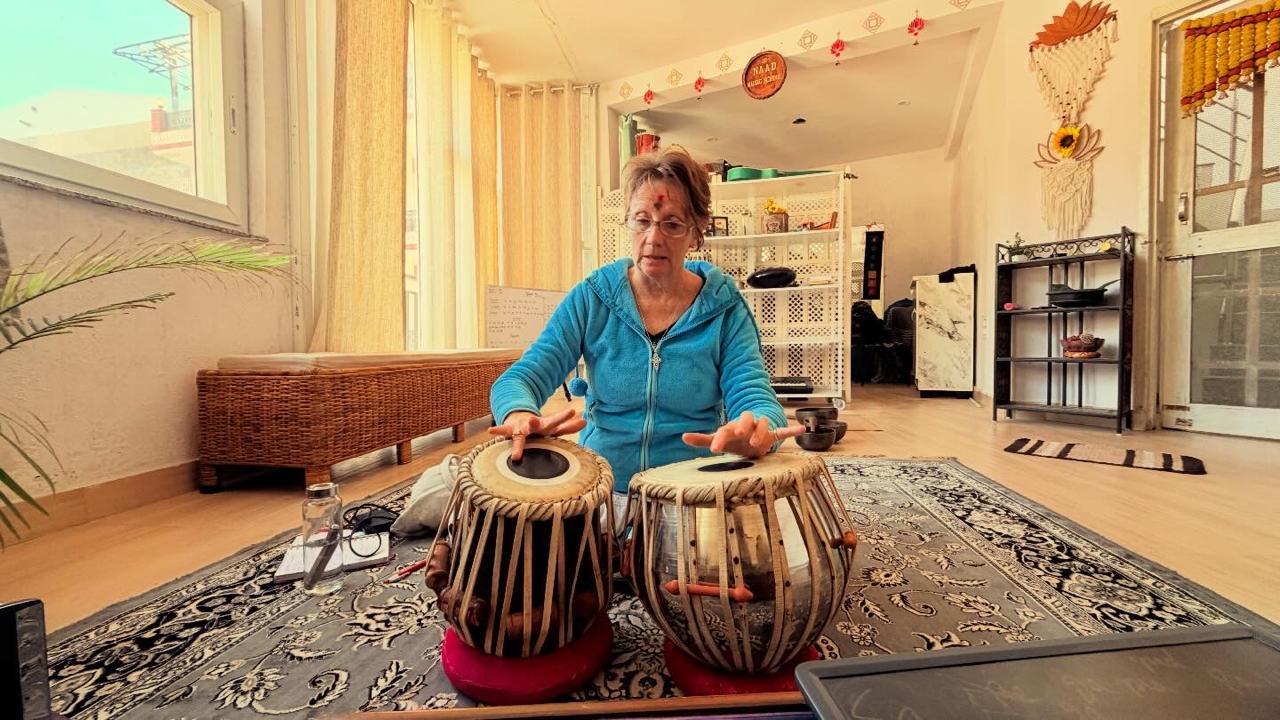
Raga expression, improvisation, meend and ornamentation, laykari, and accompaniment with tabla — the point where the instrument becomes a voice rather than an exercise.
Class timings. Six slots run daily and you keep the one that suits your routine: 9:30–10:30 AM, 11:00 AM–12:00 PM, 12:30–1:30 PM, 2:00–3:00 PM, 4:00–5:00 PM, and 5:30–6:30 PM. Morning slots suit students who also practise yoga; evening slots suit those still adjusting to the time difference.
Online is available. Live one-to-one lessons run over Zoom, Google Meet or WhatsApp video, scheduled around your local time zone. Many students begin online, come to Rishikesh for an intensive, then continue online with the same teacher afterwards.

Before the first note is played, students and guru chant together. It is a short moment, but it settles the room and marks the class as something separate from the day around it — clarity, confidence and the removal of obstacles before learning begins.
Flute and Naad music training at Rishikesh Music Class, Laxman Jhula, Rishikesh. Trained in the traditional Indian classical lineage, with years of teaching students from across the world.
Rishikesh Music Class provides music courses only. Accommodation and hotel facilities are not provided by the school.
Please book your own hotel, room, guest house or ashram stay before arriving. Many comfortable and affordable options sit within walking distance of the school at Laxman Jhula, and we are happy to suggest areas.
Instruments. A bansuri is available for use during your sessions, so nothing is needed for your first class. For daily riyaz your own flute helps considerably — your teacher will guide you on pitch, quality and fair local pricing rather than letting you buy blind.
Send the short form across and it opens directly in WhatsApp with your details already written out. We reply personally — usually within a few hours — with availability, the current fee for your chosen course, and a suggested start date.