There is a question I ask students on the first day, and almost nobody answers it the way they expect to. Not what do you want to play — but what do you think sound actually is?
Most people describe sound as something that happens: a vibration in air, a wave hitting an eardrum, an event with a beginning and an end. That description is correct and it is also the reason so many students arrive with a subtle handicap. If sound is an event, then music is a series of events, and practising music becomes the business of arranging events more skilfully. Faster. Cleaner. More impressively.
Indian musical thought begins somewhere else entirely. It begins with नाद — naad — the proposition that sound is not an event inside the world but the material the world is assembled from. Not a thing that happens in space, but the thing that space happens in.
You can treat that as poetry if you like. Many students do at first. But it is worth sitting with, because it is not decoration on top of the music. It is the load-bearing idea, and once you accept it, a great many practical decisions stop being arbitrary.
Anahata and Ahata: Two Kinds of Sound
The tradition splits naad into two categories, and the distinction is the most useful thing in this essay.
Anahata naad is unstruck sound — sound that is not produced by anything. No string, no breath, no impact. It is described as continuous, prior to and independent of any instrument. In the old texts it is the hum underneath existence, the vibration that does not require a vibrator. If that sounds impossible, note that the tradition never claims you can play it. Only that you can become quiet enough to notice it.
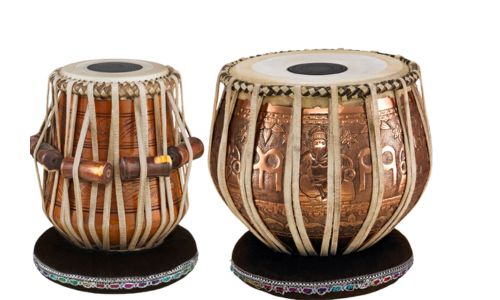
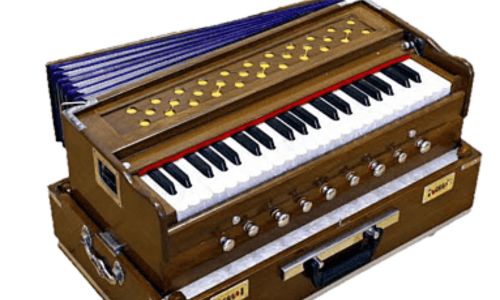
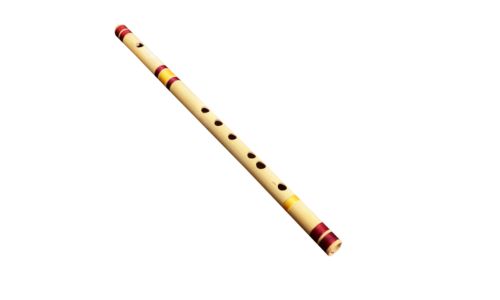
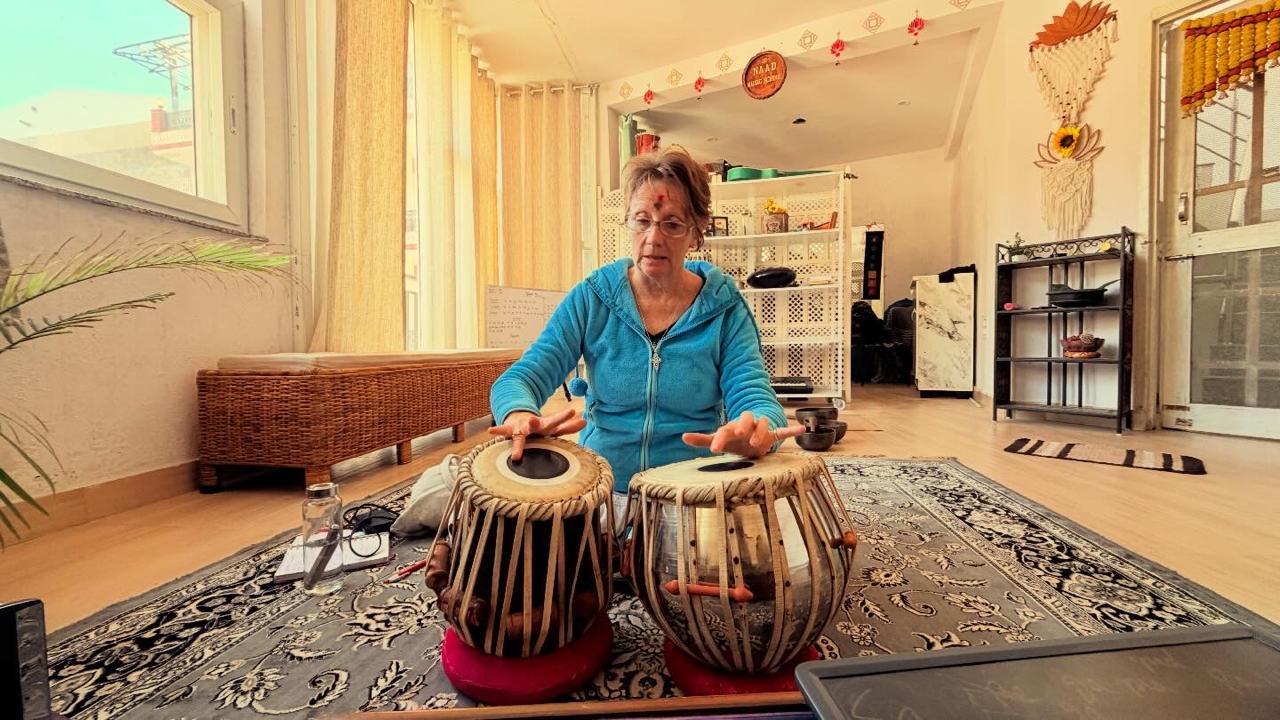
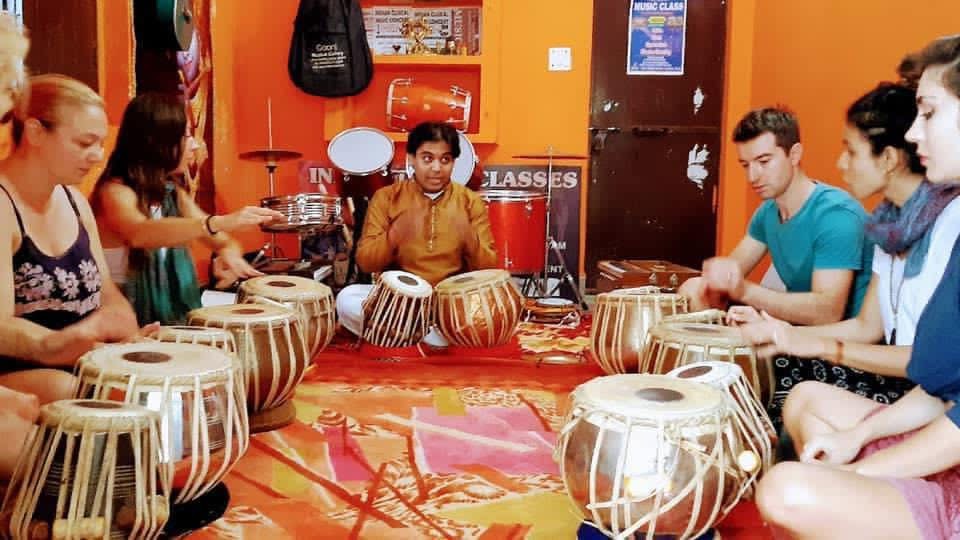
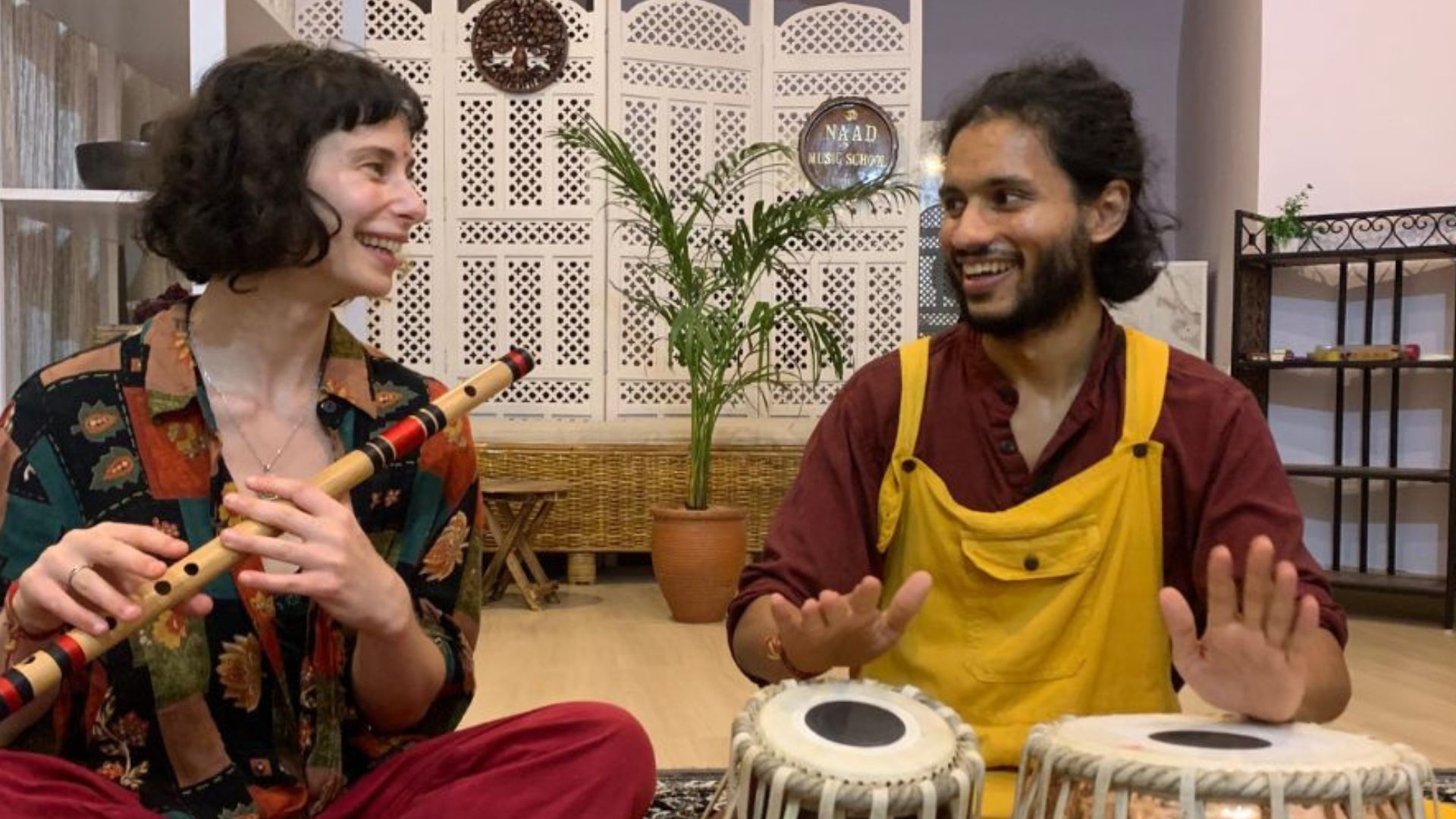
Ahata naad is struck sound — everything a musician can actually make. A finger on a string, a breath across a bamboo edge, a palm on stretched skin, air pushed through vocal folds. All of it. Every note you will ever play in your life belongs to this second, smaller category.
Here is what that arrangement implies, and it is genuinely humbling: the musician does not create sound. The musician disturbs something that was already there, briefly and imperfectly, and then gets out of the way.
“A musician is not a source of sound. A musician is an interruption in a silence that was already complete.”
How the idea is usually put in the teaching room
I labour this point because it changes the emotional temperature of practice. If you are the source of the music, then every bad note is a personal failure, and practice becomes a daily audit of your inadequacy. I have watched talented students quit for exactly this reason. But if the sound is already there and your job is to become a clearer opening for it, then a bad note is simply an obstruction — a piece of information about where you are still in the way. That is a workable relationship with an instrument. You can sustain it for forty years.
Why This City Teaches It Better Than a Classroom
Rishikesh has an unfair advantage as a place to learn this, and it is not the temples or the reputation. It is the water.
The Ganga at Laxman Jhula does not stop. It does not pause between phrases or rest at the end of a line. It produces a broad, unbroken band of sound that sits underneath everything else in the town — under the bells, the traffic on the bridge, the monkeys on the railings, the conversation in the next room. Students who practise here for three weeks start reporting the same thing: they stop hearing the river as noise and start hearing it as a drone. And once you hear it as a drone, you cannot help tuning to it.
That is naad training, and no exercise sheet delivers it. It is simply the experience of a continuous sound that was not made for you, is not about you, and does not require your participation — against which your own playing is revealed as a small, deliberate, temporary act.
A short exercise you can do tonight
Sit for four minutes without an instrument. Do not meditate; do not try to empty your mind. Simply catalogue every sound you can hear, from loudest to faintest, and keep going past the point where you think you have found them all.
Most people stop at five or six sounds. Push to twelve. Somewhere around eight or nine, the quality of your attention changes noticeably — and that changed attention, not the list, is the entire point of the exercise.
Om, and Why the Class Begins With It
Every course at this school opens with chanting. Students sometimes assume this is a religious requirement, and it is worth being precise: it is not. Nobody is asked to believe anything. It is a technical procedure with a specific function, and it happens to be very old.
The syllable ॐ is treated as the closest audible approximation of anahata naad — the nearest a struck sound can come to representing unstruck sound. Chanted properly, it moves through three phases and a fourth that is not a phase at all. A opens at the base of the throat with the mouth wide. U travels forward as the lips close. M resonates in the closed mouth and the sinuses. And then the silence afterwards, which the tradition insists is part of the syllable and not merely its absence.
What the chant does in practical terms is three things at once. It warms the vocal apparatus. It slows and lengthens the breath, which lowers a nervous student's heart rate faster than any reassurance from a teacher. And it establishes a shared pitch in the room, so that when the first note of the actual lesson arrives, everyone present is already inside the same tuning.
Fifty seconds of work. It does more than the first ten minutes of most lessons.
The Objection Worth Taking Seriously
Let me put the strongest argument against everything I have just claimed, because students who do not raise it are usually just being polite.
The objection is this: none of it is measurable. Anahata naad cannot be recorded. No instrument detects it. A skilled musician who thinks sound is a pressure wave and nothing more can outplay a devout one who has never practised. If the philosophy were doing real work, surely the philosophically inclined would simply be better players — and they are not.
That objection is sound, and I have no counter-argument to it, because it is aimed at a claim I am not making. The naad framework is not a physical theory competing with acoustics. It never was. It is a framework for attention, and frameworks for attention are judged by what they let you notice, not by what they let you measure.
So judge it that way. Musicians trained inside this framework consistently do things that musicians trained outside it tend not to: they tune obsessively rather than approximately; they treat silence as material rather than as gaps; they hold a single note long enough to hear it change; they consider a rushed phrase a more serious error than a wrong note. Those are not mystical achievements. They are audible, teachable, checkable habits — and the philosophy is what produces them reliably. That is a defensible claim about a useful idea, and it is the only one I want to make.
What Changes on Monday Morning
Suppose you take naad seriously for one month. Four things will change, and none of them are abstract.
You will tune for longer. Not because tuning is virtuous, but because you will start hearing the difference between nearly right and right, and nearly right will begin to grate.
You will hold notes. Beginners play notes; they rarely hold them. A held note has an internal life — it arrives, settles, wavers, and decays — and you cannot hear any of that in half a second.
You will stop filling silence. The impulse to keep playing is almost always anxiety, and it is the most common reason an otherwise good student sounds hurried.
You will practise on bad days. This is the largest one. When the sound is not yours to produce, a bad day is not evidence about your talent. It is weather. You sit down anyway, you notice you are in the way, and you keep going — which over ten years is the only thing that has ever separated the students who arrive from the students who continue.
NaadAnahataNaad Yoga
OmPhilosophyRishikesh
Amresh Kumar
Founder & Teacher · Rishikesh Music Class
Teaches raga studies, bansuri, tabla, harmonium, voice and Naad yoga one-to-one at Sant Sewa Ashram, Laxman Jhula. Trained in the traditional guru–shishya lineage, and has taught students from more than forty countries in English and Hindi.